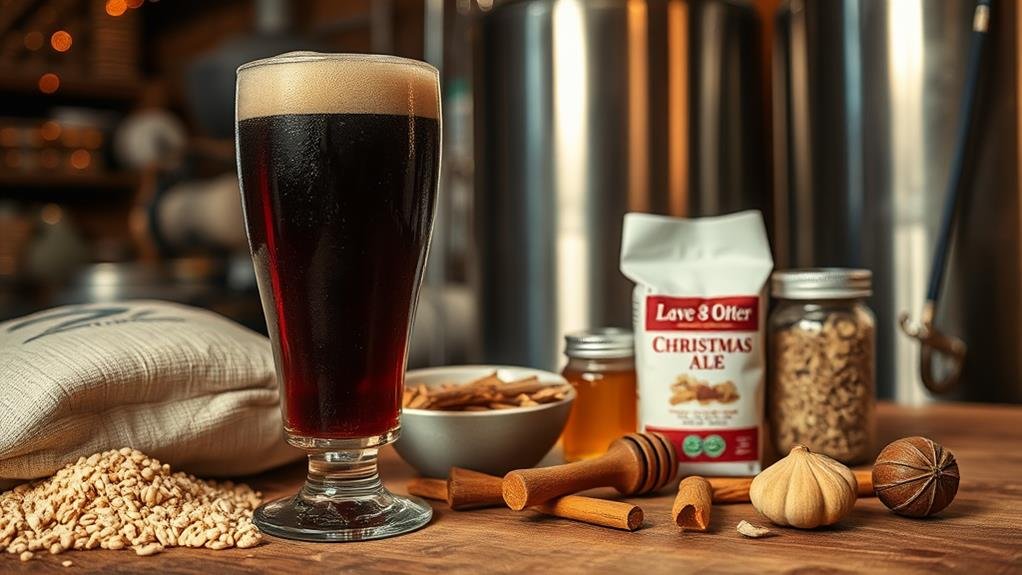
As a seasoned brewer, I've experimented with countless ale recipes over the years, but there's something truly special about the Christmas Ale. It's a blend of Maris Otter, crystal malt and roasted barley, balanced with festive spices like cinnamon, ginger, and nutmeg. Add a touch of honey post-boil, and you've got a brew with a high original gravity, perfect for aging. Fermenting it at about 63-68°F, you can capture the essence of the holidays in a glass. But what more could this complex brew possibly hold for us?
Recipe
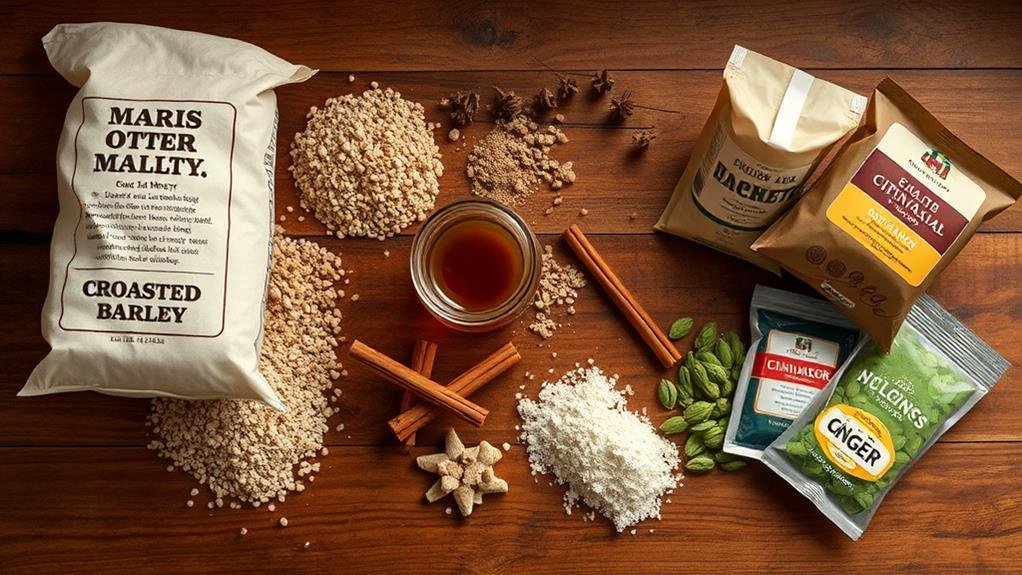
When the holidays roll around, nothing warms the heart and soul quite like a well-crafted Christmas ale. As a homebrewer, I've found that the key to a quality Christmas ale lies in the balance of flavors – the rich maltiness should be complemented by the warmth of the spices, with neither overpowering the other.
In this recipe, I'll be using Maris Otter for the malt base, with specialty malts like crystal and roasted barley to add depth and complexity. For the spices, I prefer using fresh, whole cinnamon, ginger, and nutmeg. I've also listed honey as an adjunct, which should be added at the end of the boil to preserve its delicate flavor profile.
This beer is designed to have a higher original gravity, which translates to a higher alcohol content once fermented. This makes it perfect for aging – you can brew it in the fall and enjoy it throughout the winter months. The fermentation temperature is crucial here. I've found that maintaining a temperature between 63-68°F (17-20°C) allows for the development of esters that contribute to the distinct character of a Christmas ale.
Here is the list of ingredients for a 5-gallon batch:
- 12 lbs Maris Otter malt
- 1 lb Crystal malt
- 0.5 lb Roasted Barley
- 1.5 oz East Kent Goldings hops
- 1 lb Honey
- 0.5 oz Cinnamon sticks
- 0.5 oz Ground Ginger
- 0.25 oz Ground Nutmeg
- 1 pkg English Ale Yeast
To begin, heat 5.5 gallons of water to 152°F (66°C) and mash in the Maris Otter, Crystal malt, and Roasted Barley. Hold the temperature for 60 minutes, then drain and rinse the grains.
Add the East Kent Goldings hops and bring the mixture to a boil. After 60 minutes of boiling, add the cinnamon, ginger, and nutmeg. Turn off the heat, then stir in the honey until it's fully dissolved. Cool the wort quickly to 68°F (20°C), transfer to a fermenter, and pitch the yeast.
Ferment at 63-68°F (17-20°C) for two weeks, then bottle or keg the beer for aging.
A few additional tips to keep in mind: when adding the spices, make sure to use fresh and whole spices whenever possible. They'll provide a cleaner, more distinct flavor compared to pre-ground or old spices.
Also, be careful not to overdo it with the spices – you want them to complement the malt flavors, not overwhelm them. Finally, remember that this beer is perfect for aging. So, don't hesitate to brew it early and let it mature over a few months. The flavors will meld over time, resulting in a smoother, more harmonious ale that's perfect for the holiday season.
Brief history about this recipe
In the realm of brewing, the tradition of Christmas ales harks back to the Middle Ages. Cultures worldwide brewed their special concoctions to celebrate the winter season, with each brew embodying the spirit of the festivities.
In 1975, Anchor Brewing Company reignited this tradition, crafting their Christmas Ale, a unique recipe each year that's rich in holiday flavors. This practice showcased the evolution of brewing, with each year's ale revealing a new facet of this rich tradition.
The heart of Christmas Ale lies in its malt. Many of these ales take inspiration from English old ale styles, known for their dark, fruity, and complex profiles.
These ales aren't just about malt, though. They're a delicate balance of spices like cinnamon, nutmeg, and ginger that evoke the holiday spirit, making them a seasonal staple.
Over the years, Christmas Ales have taken a front seat in the craft brewing scene. They're not just beers; they're an experience.
With higher alcohol content and complex flavours, these ales are made for sipping and aging. So, this Christmas, let's toast to this rich brewing tradition with a glass of Christmas Ale.