
I love making a refreshing romaine lettuce salad! First, I wash and dry a head of romaine, then chop it into bite-sized pieces. I mix together olive oil, red wine vinegar, salt, and pepper for a tangy dressing. Then, I toss the lettuce with the dressing and add halved cherry tomatoes, diced cucumber, sliced red onion, and crumbled feta. It’s important to serve it right away for maximum freshness. There’s so much more to discover about this versatile ingredient!
Lettuce Salad Preparation Method
Ingredients:
- 1 head of romaine lettuce
- 1 cup cherry tomatoes, halved
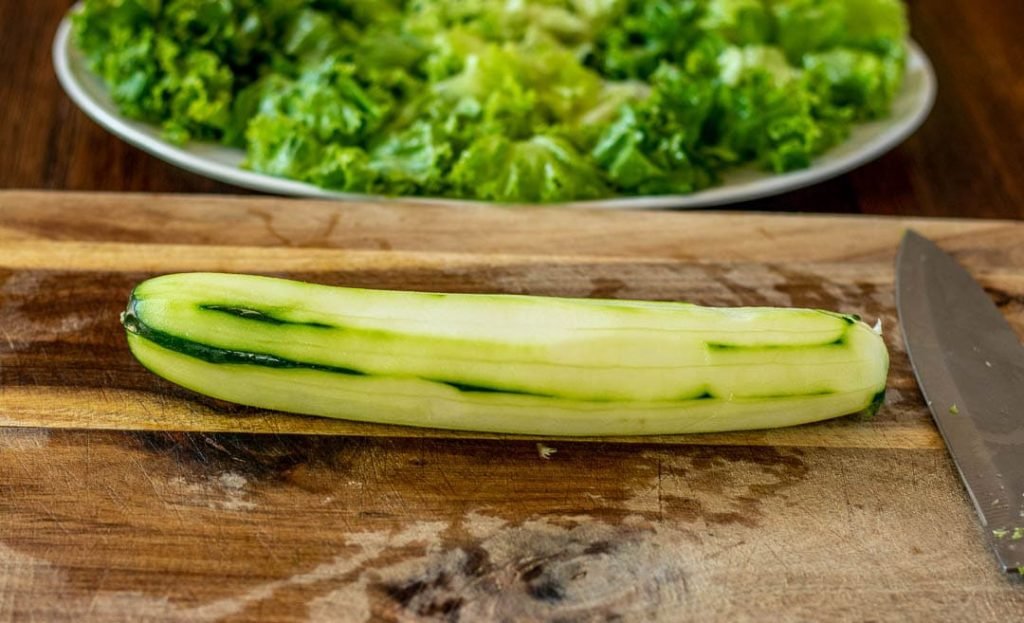
- 1 cucumber, diced
- 1/2 red onion, thinly sliced
- 1/2 cup feta cheese, crumbled
- 1/4 cup olives (optional)
- 1/4 cup olive oil
- 2 tablespoons red wine vinegar
- Salt and pepper to taste
Instructions:
- Begin by selecting a fresh head of romaine lettuce, ensuring the leaves are crisp and vibrant. Cut off the core and separate the leaves.
- Rinse the romaine leaves thoroughly in cold water, making sure to remove any dirt or debris.
- Spin the lettuce in a salad spinner or pat it dry with clean paper towels to remove excess moisture.
- Chop the romaine into bite-sized pieces and place them in a large mixing bowl.
- Add the halved cherry tomatoes, diced cucumber, sliced red onion, and crumbled feta cheese to the bowl.
- If you’re using olives, add them to the mix for an extra pop of flavor.
- In a small bowl, whisk together the olive oil, red wine vinegar, salt, and pepper to create the dressing.
- Pour the dressing over the salad ingredients and toss gently to combine, ensuring everything is well-coated.
- Serve the salad immediately on a large platter or in individual bowls, enjoying the fresh flavors.

Extra Tips:
When preparing this romaine lettuce salad, I like to ensure that all my ingredients are as fresh as possible for optimal flavor. Additionally, you can enhance the dish by incorporating a colorful array of vitamins from other veggies like bell peppers or carrots for added crunch and color.
I also prefer to dress the salad just before serving to keep the lettuce crisp.
If I’ve leftovers, I store them separately from the dressing to prevent wilting.
For a twist, you can substitute the feta with goat cheese or add some grilled chicken for protein.
Enjoy your fresh and vibrant salad!
Originated in Ancient Rome
Although many might think of romaine lettuce as a modern staple, its origins trace back to ancient Rome, where it flourished in the gardens of the Mediterranean.
Surprisingly, ancient Egyptians cultivated this leafy green over 4,500 years ago, influencing Greek and Roman diets. I find it fascinating that the Greeks learned from the Egyptians, using the sap medicinally, before the Romans adopted and improved its cultivation.
In ancient Rome, lettuce became a staple across social classes, often featured in meals with garum, a fermented fish sauce. They enjoyed it fresh or in complex salads dressed with unique mixtures like oxygarum. Historically, it was a widely consumed staple in various diets, contributing to its popularity.
Today, we owe the name “romaine” to this rich history, and it continues to shine in dishes like Caesar salad.